
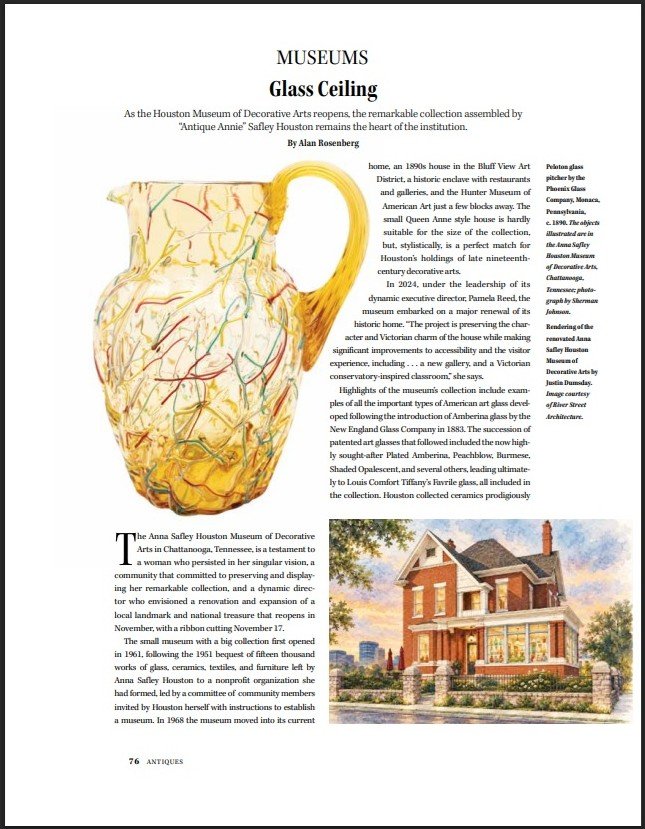
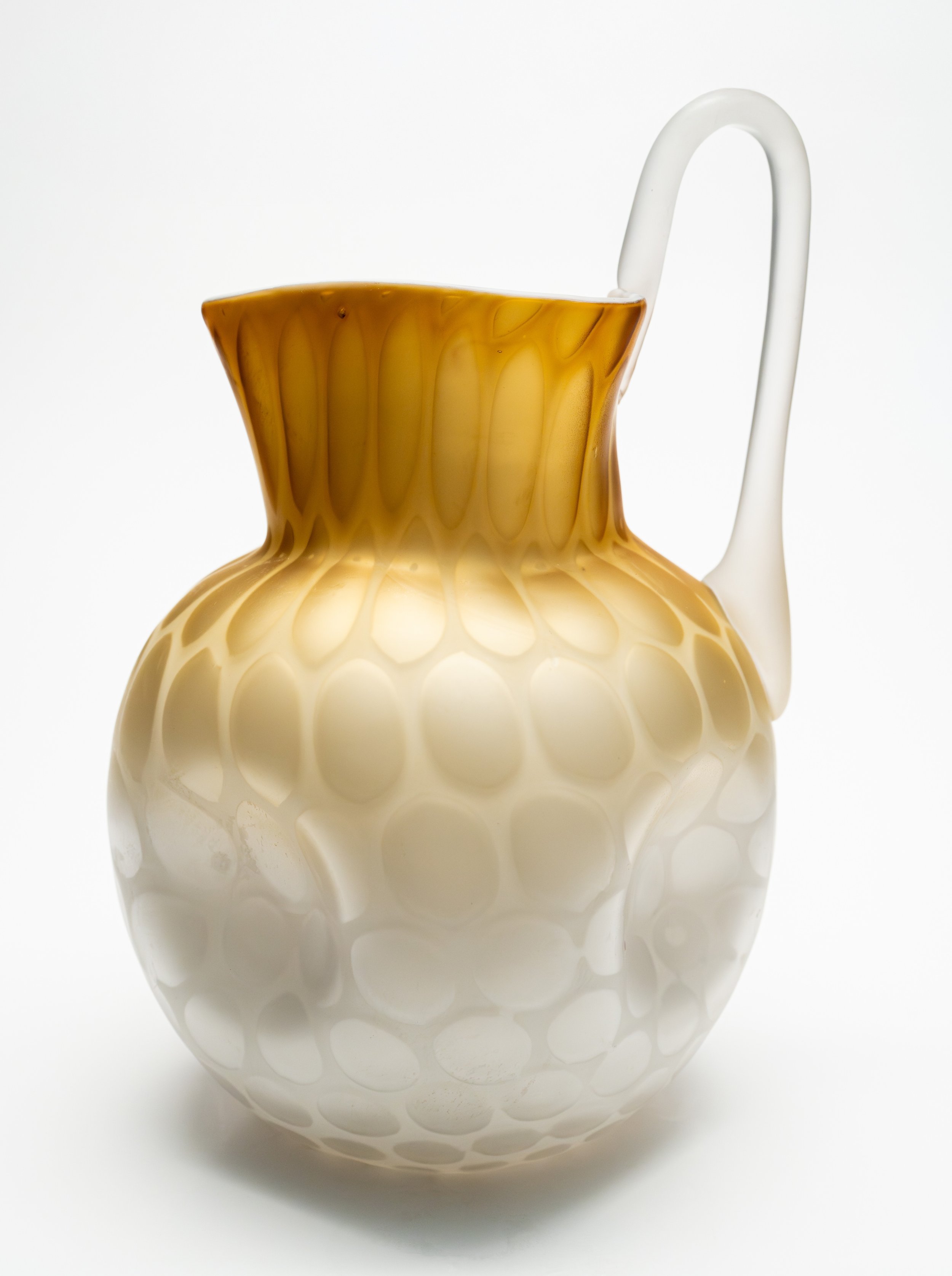
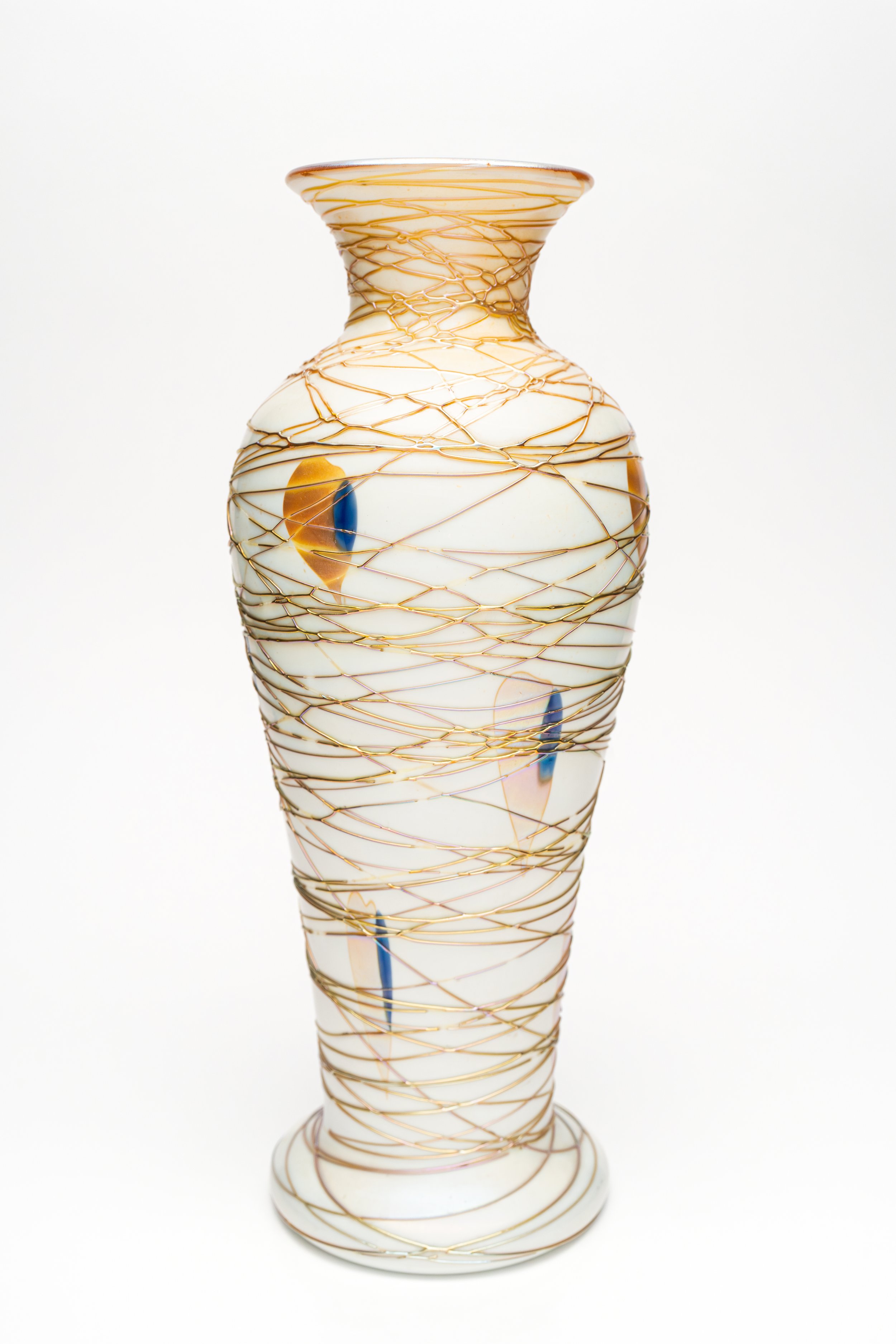
I am pleased to report that my article “Museums: Glass Ceiling” has been published in the November/December issue of the magazine Antiques. The article describes the renovation, restoration and reopening of Anna Safley Houston Museum of Decorative Arts, in Chattanooga, Tennessee. The glass ceiling in the title refers to the new glass conservatory addition to the museum’s historic Queen Anne style house. The renovation/restoration was overseen by architect Justin Dumsday who designed the new conservatory which he says “drew inspiration from Victorian glass houses, where structure, craftsmanship, glass and daylight all become part of the experience of the room. We imagined it as a human-scaled vessel of glass and light, which felt especially appropriate for a museum so closely associated with extraordinary decorative glass. In a way, the conservatory becomes a piece of decorative art itself—a room made of structure, proportion, glass and light.”
The small museum with a big collection first opened in 1961, following the 1951 bequest of 15,000 works of glass, ceramics, textiles and furniture left by Anna Safley Houston to a non profit organization she formed, led by a committee of 100 community members invited by Houston herself, with instructions to establish a museum. In 1968 the museum moved into its current home, an 1890s house in the Bluff View Art District, a historic enclave with restaurants and galleries, and the Hunter Museum of American Art just a few blocks away. The small Queen Anne style house is hardly suitable for the size of the collection but, stylistically, a perfect match for Houston’s collection of late 19th century decorative arts.
In 2024, under the leadership of its dynamic Executive Director, Pamela Reed, the museum embarked on a major renewal of its historic home. She stated that “the project is preserving the character and Victorian charm of the house while making significant improvements to accessibility and the visitor experience, including an elevator, ADA-compliant restrooms on both floors, a new gallery, and a Victorian conservatory-inspired classroom.”
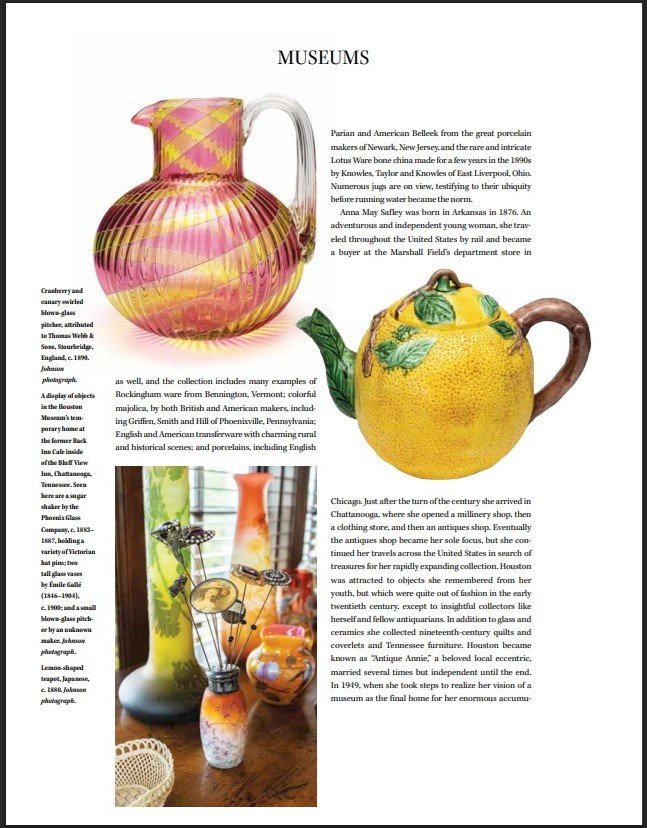
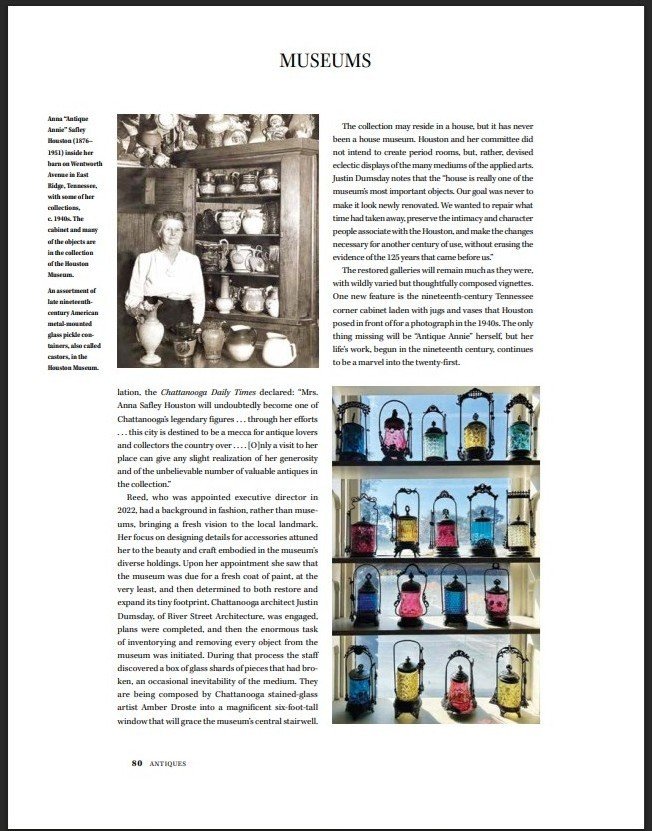
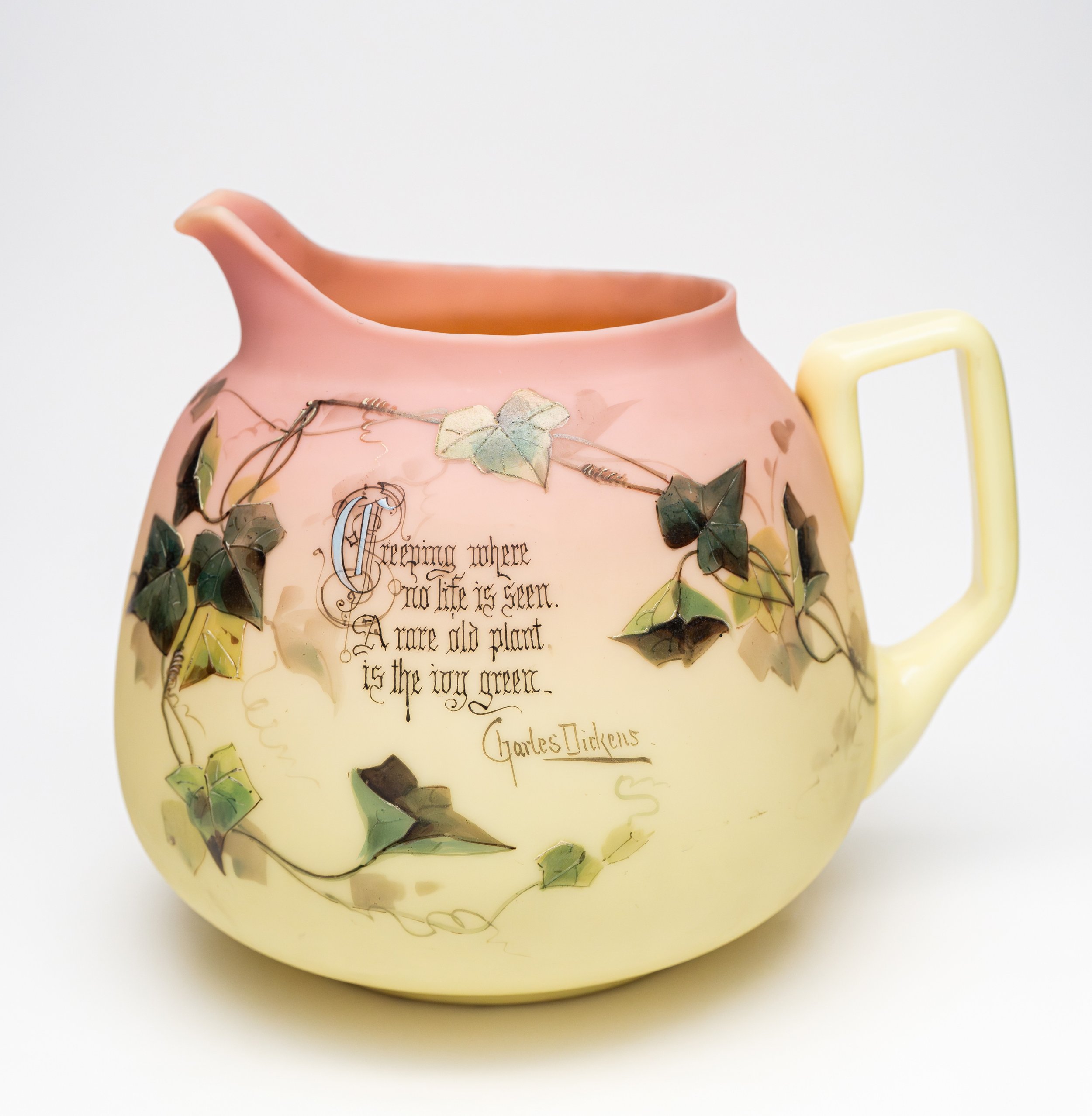
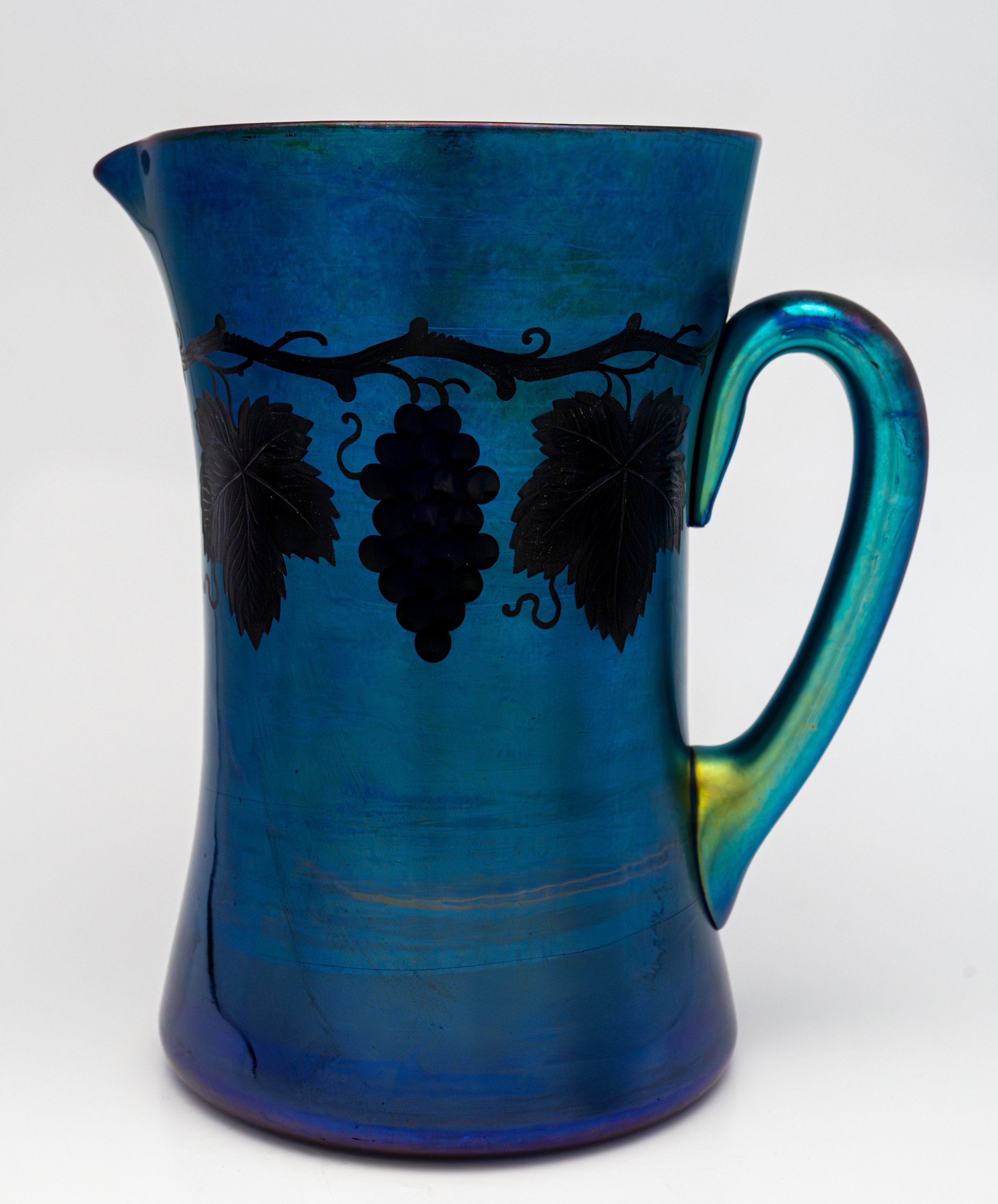
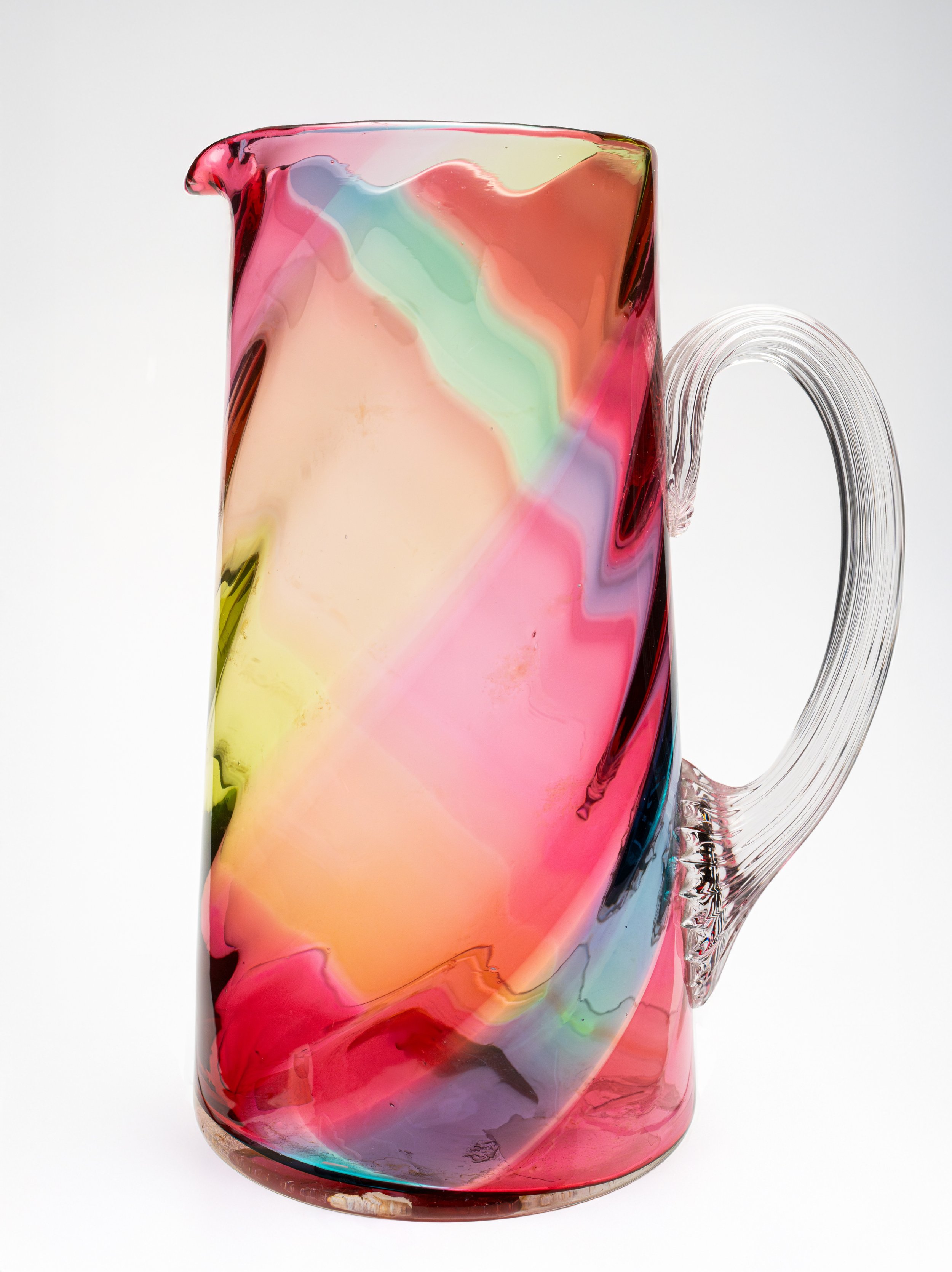
The museum has always been beloved locally but outside of Chattanooga it was known as a curiosity to those who even knew about it at all. What was once an oddball collection of bric-a-brac is now being revealed as one of the most important collections of 19th century decorative arts in the United States. Highlights of the collection include examples of all the important American art glasses that developed following the introduction of Amberina glass by The New England Glass Company in 1883. The succession of patented art glasses that followed included the now highly-sought-after Plated Amberina, Peachblow, Burmese, Shaded Opalescent, and several others, leading ultimately to Louis Comfort Tiffany’s Favrile glass, all represented in abundance in the museum’s collection. Houston collected ceramics prodigiously as well and the collection includes many examples of Rockingham ware from Bennington, Vermont, colorful majolica, by both British makers and American, including Griffen, Smith and Hill of Phoenixville, Pennsylvania, English and American transferware with charming rural and historical scenes, and porcelains including English parian, and American Belleek from the great porcelain makers of Newark, New Jersey, and the rare and intricate Lotus Ware bone china made for a few brief years in the 1890s by Knowles Taylor and Knowles of East Liverpool, Ohio, amongst many highlights. Jugs are numerous in the collection, as they were ubiquitous in the 19th century, before running water became the norm. The collection resides in a house but is not a house museum. Houston and her committee did not intend to create period rooms, but, instead, they arranged eclectic displays of the many mediums of the applied arts.
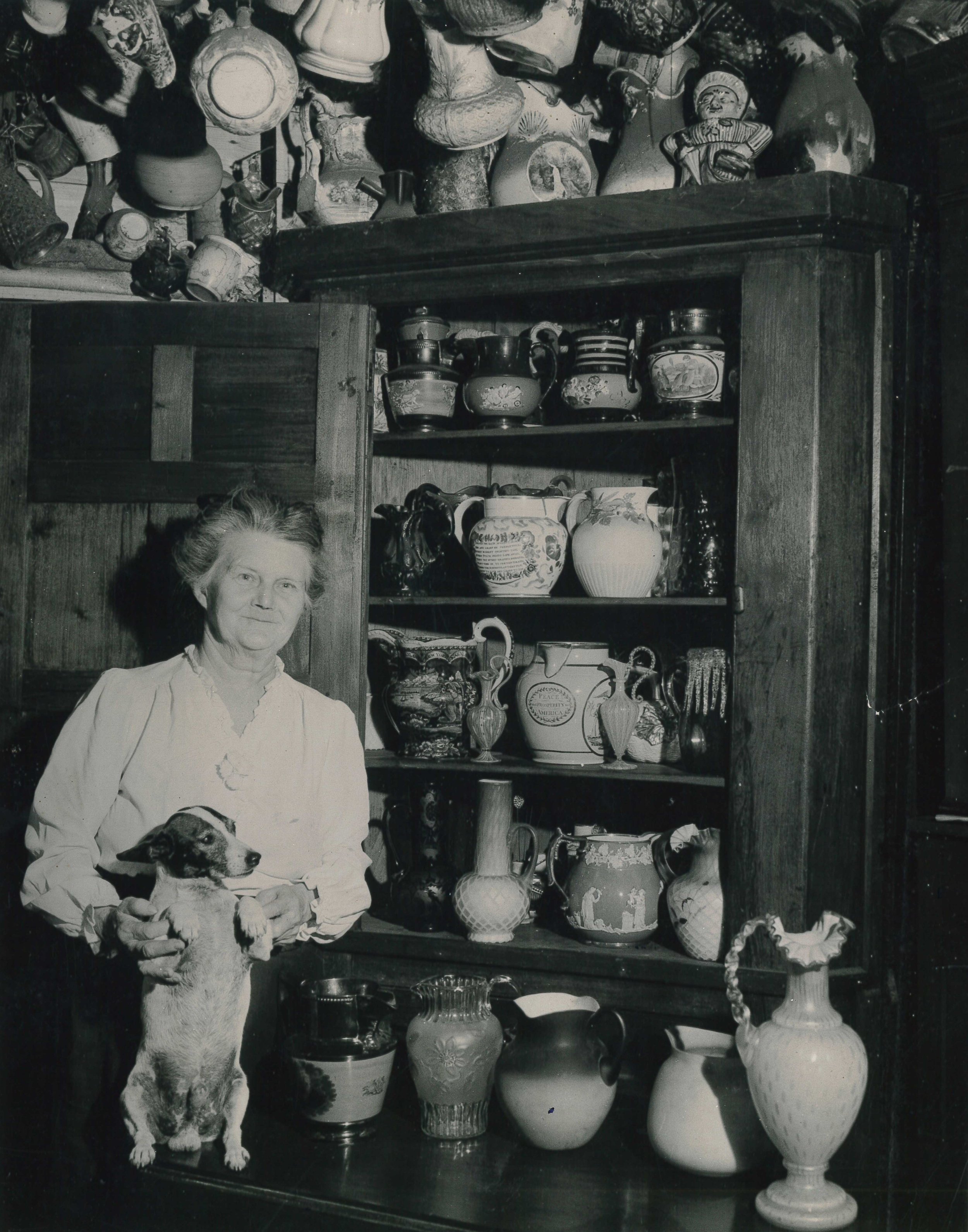
Anna May Safley was born in Arkansas in 1876. She was an adventurous and independent young woman who traveled throughout the United States by rail and became a buyer at the Marshall Field’s department store in Chicago. Just after the turn-of-the-century she arrived in Chattanooga where she opened a millinery shop, then a clothing store and then an antiques shop. Eventually the antiques shop became her sole focus, but she continued her travels across the United States, in search of treasures for her rapidly expanding collection. Houston was attracted to objects that she remembered from her youth and which were quite out of fashion in the early 20th century, except to insightful collectors like herself and fellow antiquarians. In addition to glass and ceramics she collected 19th century quilts and coverlets and Tennessee furniture, even before they were recognized as “folk art.” Houston became known as “Antique Annie,” a beloved local eccentric, married a number of times but independent until the end. In 1949, when she took steps to realize her vision of a museum as the final home for her enormous accumulation, the Chattanooga Daily Times declared that “Mrs Anna Safley Houston will undoubtedly become one of Chattanooga’s legendary figures . . . through her efforts [ . . . ], this city is destined to be a mecca for antique lovers and collectors the country over . . . only a visit to her place can give any slight realization of her generosity and of the unbelievable number of valuable antiques in the collection.”
The restored galleries will remain much as they were, with wildly varied but thoughtfully composed vignettes, rather than recreations of historic rooms. One new feature will be the installation of the 19th century Tennessee corner cabinet laden with jugs and vases that Houston posed in front of for a photograph in the 1940s. The only thing missing will be Antique Annie herself, but her life’s work, begun in the 19th century, continues to be a marvel into the 21st century.